

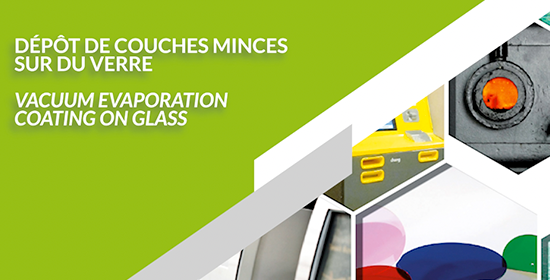
Vacuum evaporation coating involves coating a glass surface with a very thin film of metal or mineral material, deposited in a chamber where a very high vacuum has been created.
The glass is first carefully cleaned, then placed in this vacuum chamber where a material (often a metal such as chromium or aluminum) is heated to a very high temperature until it vaporizes.
The atoms of the vaporized material spread throughout the vacuum chamber and condense directly onto the glass surface, forming an extremely thin and homogeneous layer (a few tens of nanometers).
This technique allows for precise control of the layer thickness and the creation of optical effects (reflections, various colors) or improved mechanical strength, while remaining virtually invisible to the naked eye.
🎥 Vidéo : https://www.youtube.com/watch?v=OxlniY-upNo